

A clear guide to treatment
Understanding dental implant care
If you are comparing ways to replace missing teeth, the right choice begins with understanding your health, the condition of your remaining teeth, and what you want from treatment.
What Are Dental Implants?
A dental implant is a small post placed in the jaw to replace the root of a missing tooth. After it integrates with the surrounding bone, it can support a custom crown, bridge, or implant denture.
Because the restoration is supported below the gumline, an implant can feel stable during everyday activities such as speaking and eating. Treatment is planned around your oral health, available bone, bite, and the number of teeth being replaced.
Benefits of Replacing Missing Teeth
Replacing a missing tooth is about more than filling a visible space. A well-planned restoration can help distribute biting pressure, support neighboring teeth, and make daily oral care more predictable.
- A fixed, natural-looking replacement designed for your smile
- Improved stability compared with a removable appliance
- Support for comfortable chewing and clear speech
- Treatment options for one tooth, several teeth, or a complete arch
- A restoration planned to complement your facial features and bite
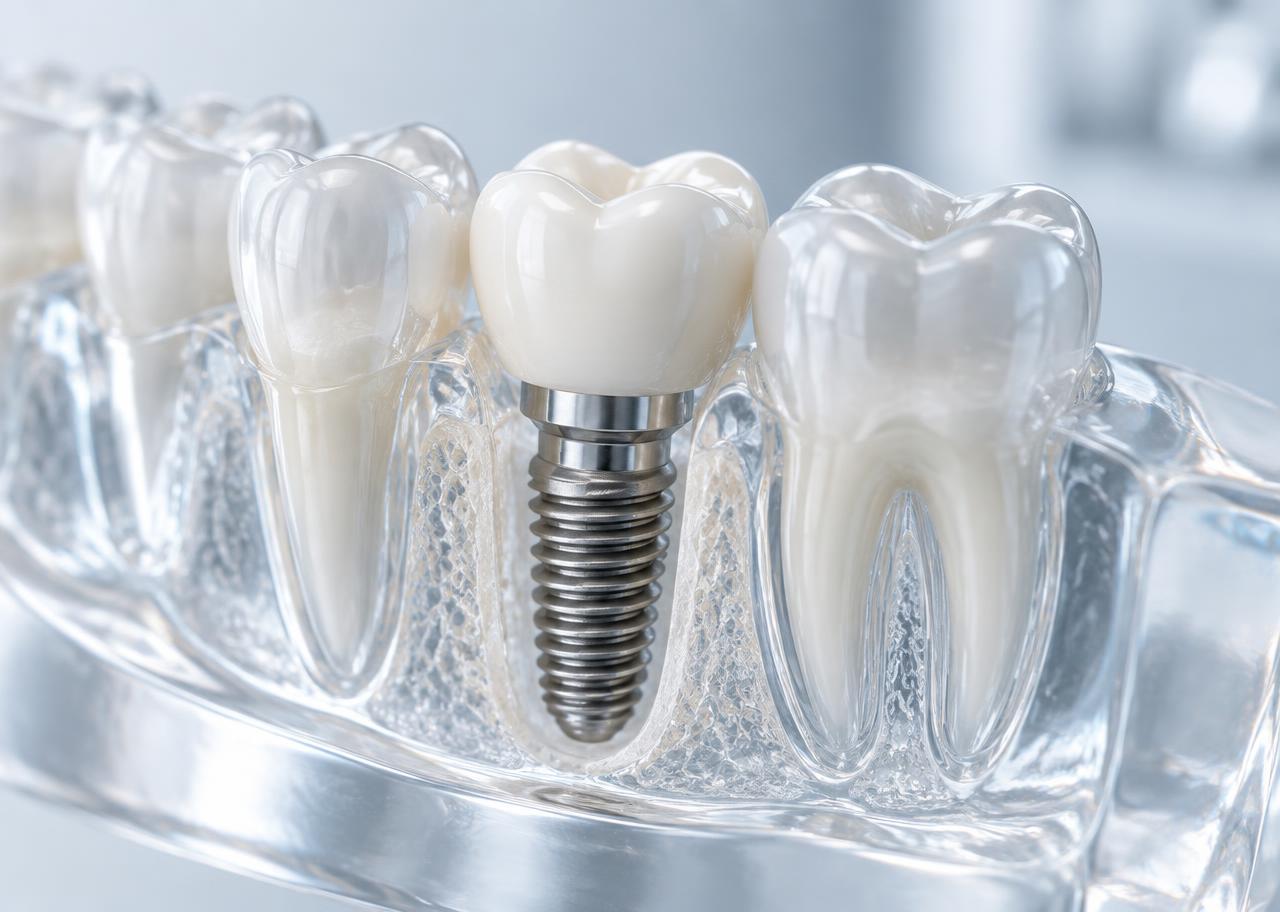
Designed from the foundation up
Three parts, one complete tooth
The implant supports an abutment and custom restoration above the gumline. Together, these parts replace both the visible tooth and its underlying support.
Who May Be a Candidate?
Many adults with one or more missing or non-restorable teeth may be candidates for implant treatment. A consultation is necessary because gum health, bone volume, medical history, medications, and tobacco use can all affect the treatment plan.
At our Valencia office, three-dimensional imaging helps the doctor evaluate the jaw and nearby anatomy. If bone volume is limited, bone grafting or another approach may be discussed. Being told elsewhere that you do not have enough bone does not necessarily mean there are no options.
The Dental Implant Process
Every case is different, but implant treatment generally begins with an examination, digital imaging, and a conversation about your goals. The implant is then placed according to the treatment plan and allowed time to integrate before the final restoration is attached.
- Consultation, examination, and three-dimensional planning
- Treatment of any active infection or gum concerns
- Implant placement and a carefully monitored healing period
- Placement of the custom crown, bridge, or implant denture
- Ongoing hygiene visits and home care to protect the result
Comfort and Recovery
Recovery depends on the number of implants placed and whether additional procedures are needed. Mild swelling, tenderness, or bruising can occur during early healing. You will receive instructions for cleaning the area, choosing appropriate foods, and managing discomfort.
Sedation options may be available for patients who feel anxious or are planning a longer procedure. The team will explain what to expect before treatment so you can prepare transportation, meals, and time away from strenuous activity when needed.
Treatment options
Solutions for different types of tooth loss
The number and location of missing teeth help determine which implant restoration may be appropriate.
Single-Tooth Implant
Replaces one missing tooth without relying on neighboring teeth for support.
Implant-Supported Bridge
Uses implants to support a fixed restoration when several neighboring teeth are missing.
Implant Denture
Adds implant support to improve the stability of a removable denture.
Full-Arch Dental Implants
Replaces a complete row of teeth with a restoration supported by strategically placed implants.
Common questions
Planning your consultation
How long does implant treatment take?
Timing varies with healing, the number of implants, and whether grafting is part of the plan. Your doctor will outline the expected stages after reviewing your imaging.
How do I care for dental implants?
Daily brushing, cleaning around the restoration, and regular professional visits remain essential. We will recommend tools based on the type of restoration you receive.
What will my treatment cost?
Cost depends on the number of teeth being replaced, the restoration, and whether preparatory care is needed. An examination is the best way to receive an individualized plan and discuss payment options.